Don’t Be Afraid to Fail. Be Afraid Not to Try
The First Impression: Bold, Motivational, and Ready for Real Use
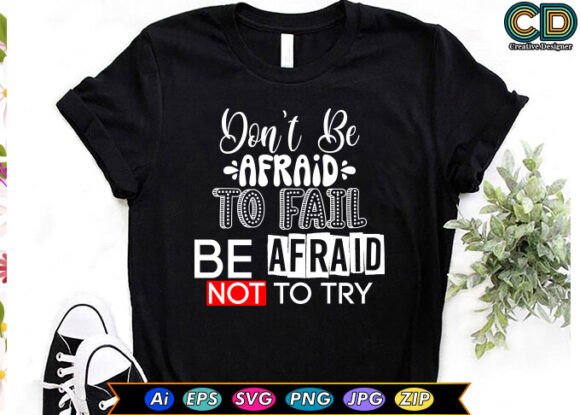
The phrase “Don’t Be Afraid to Fail. Be Afraid Not to Try” immediately commands attention. It’s a powerful message that resonates with both the heart and the mind. The design is clean, modern, and well-structured, making it ideal for a wide range of embroidery applications. The typography is bold and clear, with strong lettering that ensures readability even when scaled down or stitched at lower densities.
Design Layout and Visual Personality
This is not a decorative or ornate design—it’s straightforward and impactful. The layout is centered, which makes it versatile for various product types. The text is evenly spaced, with no unnecessary embellishments. This simplicity allows the message to take center stage, which is crucial for personalized gifts, custom apparel, and brand messaging.
The design feels professional and confident, suitable for both handmade products and commercial use. Its visual personality leans toward motivational and inspirational, fitting well with craft business branding, Etsy listings, and boutique merchandise. It also works as a digital embroidery file for printable mockups and design assets.
Real-Life Embroidery Use Case: Custom Tote Bag
Imagine you’re preparing a custom embroidered tote bag for a client who runs a small shop selling handmade goods. You want to add a meaningful message that aligns with their brand values. “Don’t Be Afraid to Fail. Be Afraid Not to Try” fits perfectly on a tote bag. It’s large enough to be legible but not so big that it overwhelms the design space.
When stitched, the text maintains its clarity and strength. The bold letters are ideal for satin stitch or fill stitch, ensuring that the message stands out even on darker fabrics. However, it’s important to test the design on scrap fabric first to ensure that the stitch density and thread colors work well together.
Stitching Clarity and Fabric Compatibility
This design performs well on most standard hoop sizes, especially those ranging from 5x7 to 8x10 inches. It’s important to check the exact dimensions before using it in a commercial setting. On light-colored fabrics like white or pastel cotton, the design shines. On dark fabrics, the contrast may need to be adjusted by choosing a different thread color, such as black or navy blue.
However, there are some considerations. The design may not perform optimally on very thin or stretchy fabrics, as these can cause distortion or uneven stitching. A good stabilizer is recommended, especially for delicate materials like linen or silk. For curved surfaces like caps or hats, the design might require slight adjustments to maintain alignment and proportion.
Design Performance Across Product Types
“Don’t Be Afraid to Fail. Be Afraid Not to Try” is a versatile machine embroidery design that can be used across multiple product categories:
- Custom Apparel: Perfect for t-shirts, sweatshirts, and hoodies, especially for motivational or personal-use items.
- Baby Embroidery: The message can be adapted for baby clothes, adding a positive and encouraging touch.
- Holiday Embroidery: Great for holiday gifts like tea towels, pillow covers, and kitchen towels.
- Commercial Embroidery: Suitable for boutique branding, promotional items, and craft fair products.
- Embroidered Patches: Can be used as standalone patches or added to other garments for a subtle yet meaningful detail.
- Personalized Gifts: Ideal for handmade products like aprons, blankets, and nursery decor.
Practical Design Notes for Embroidery Professionals
Before using this design in a real project, consider the following:
- Test on Scrap Fabric: Always test the design on a piece of scrap fabric to evaluate stitch density, thread contrast, and overall appearance.
- Check Thread Color Contrast: Ensure the chosen thread color provides sufficient contrast against the fabric background, especially for dark or textured fabrics.
- Review Stitch Density: Adjust the stitch density if needed to prevent overcrowding or sparse stitching, depending on the fabric type and desired effect.
- Confirm Hoop Size: Verify that the design fits comfortably within your hoop size to avoid stretching or distortion.
- Inspect Small Details: Pay attention to corners, letter spacing, and any tiny lettering to ensure they are clear and readable after stitching.
- Test in Black and White Mockups: Check how the design looks in grayscale to identify any potential issues with contrast or clarity.
- Use Proper Stabilizer: Choose the right stabilizer for the fabric type to maintain stability during stitching.
- Consider Commercial Use: Confirm whether the design is licensed for commercial use if you plan to sell finished products or digital files.
Final Thoughts: A Reliable Design for Meaningful Projects
“Don’t Be Afraid to Fail. Be Afraid Not to Try” is more than just an embroidery design—it’s a statement. It carries weight and purpose, making it ideal for projects that aim to inspire, motivate, and connect with customers on a personal level. Whether you're creating a custom sweatshirt for a client, designing a patch for a local shop, or building a brand identity through handmade products, this design has the potential to elevate your work.
As an experienced designer, I recommend using this design with confidence, but always with careful consideration of fabric type, hoop size, and thread color. With proper preparation, it can become a standout element in your embroidery portfolio, helping you create meaningful, high-quality handmade products that resonate with your audience.